

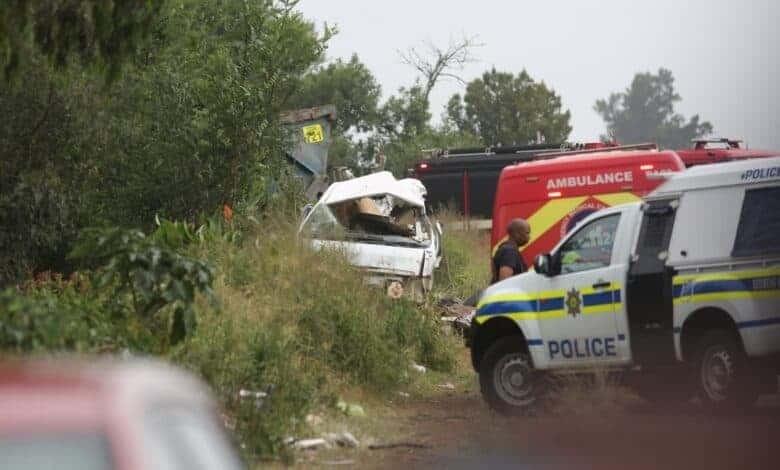
Today, South Africa broke again. Thirteen learners died in a car crash near Vanderbijlpark, close to Vereeniging, and the scenes on television were too painful to process.
It wasn’t just a crash on the road — it was a sudden tearing apart of families, futures, and innocence. Watching the footage, hearing the screams of parents and loved ones, seeing the chaos and confusion… it felt like the whole country was holding its breath while hearts shattered in real time.
These were children. Children who woke up this morning expecting school, laughter, friendships, homework, and a normal day. They deserved to return home safely. They never did.
There are tragedies that shake a nation, and then there are tragedies that expose a wound we have been ignoring for far too long. This is not just an “accident.” This is not something we can brush off as bad luck.
These are preventable deaths. And if we allow ourselves to accept them as “normal,” then we are quietly agreeing that some lives are disposable — that children’s safety is negotiable, and that families must live with unbearable loss because systems are weak and accountability is delayed.
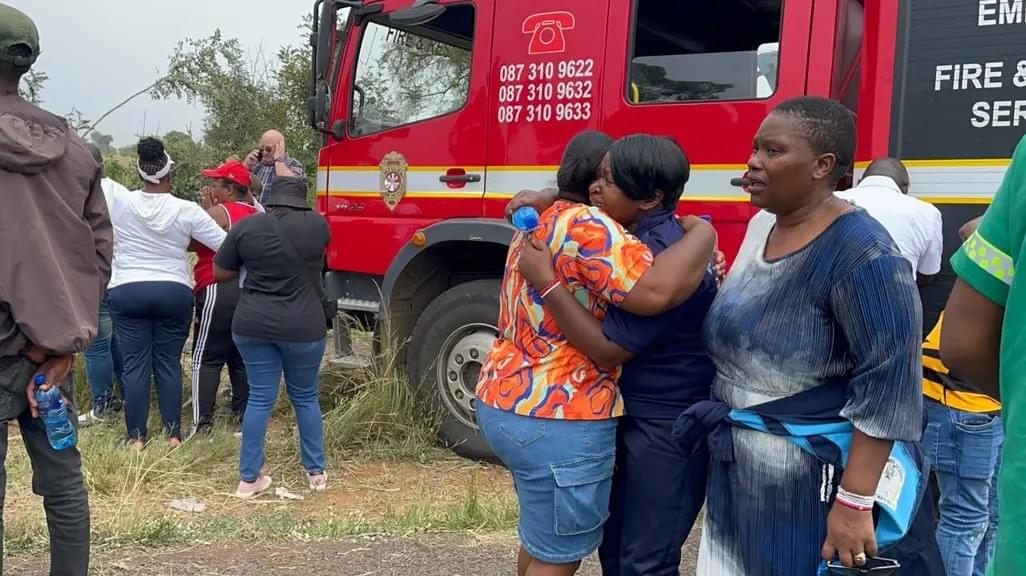
The pain of today carries the weight of many other days. Many other crashes. Many other funerals. Many other parents crying into microphones, asking the same question: “Why?” Why are our roads so unsafe? Why are scholar transport systems not protected and regulated properly? Why are we still debating basic road safety when the consequences are buried in small coffins? Why is it that every time there is a tragedy, we trend for a few days, we post candles and hashtags, we make promises, and then the cycle continues?
We cannot talk about this tragedy without speaking honestly about what our people have been saying for years: the taxi industry, scholar transport, reckless driving, overloaded vehicles, poorly maintained transport, weak law enforcement, corruption, and a culture of impunity on the roads.
These conversations are not about blaming to score points — they are about saving lives. Every time we avoid the hard conversations, we delay reforms that could prevent another family from receiving the worst phone call of their life.
Yes, there are many taxi drivers who try their best, who work long hours to feed their families, who are part of the backbone of transport in this country. But it is also true that the system has flaws that have become deadly. It is also true that there are drivers who speed, drive under pressure, overtake dangerously, overload vehicles, and put lives at risk.
It is also true that law enforcement can be inconsistent, and accountability often comes only after blood has been spilled. The question is not whether taxis are “good or bad.” The question is: why are we allowing a transport system to operate in ways that make death such a common outcome?
And what makes this tragedy even heavier is the reality that these were learners. Children. Our most precious responsibility. They should not have to risk their lives simply to access education. There is something deeply broken when getting to school becomes an act of survival.
A country that cannot safely transport its children is a country failing its future. Because every learner lost is not only a family destroyed , it is a dream erased, a potential leader gone, a community left with silence where there should have been growth.
The heartbreak of today must become more than grief. It must become a national demand for change. We need stricter enforcement of road safety laws, real consequences for reckless driving, roadworthy checks that are not compromised, and safer scholar transport systems that are monitored, supported, and regulated.
We need government departments that don’t only react after tragedy, but prevent tragedy through planning, policy, and investment. We need communities, taxi associations, parents, schools, and lawmakers to stop existing in separate corners and start building one strong safety net around our children.
Because mourning is not a strategy. Pain is not policy. Tears are not reform.
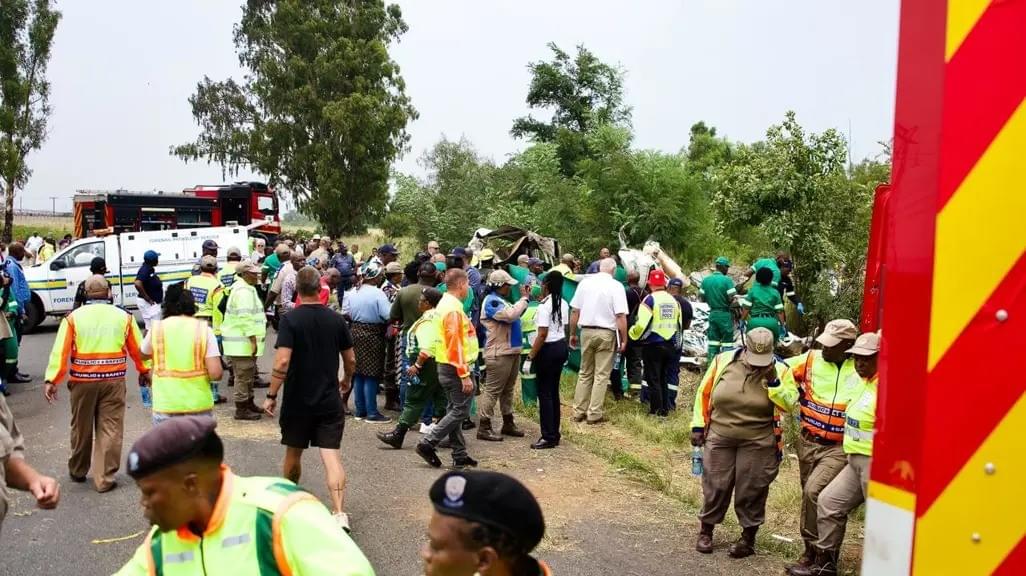
Thirteen learners died today, but thousands more will wake up tomorrow and travel on roads that still carry danger. The question is: will we change anything before the next tragedy? Or will we keep posting condolences while families are left to bury their babies? South Africa cannot continue like this. We cannot keep normalizing death, calling it “an accident,” and moving on.
Today we grieve. We grieve deeply. We grieve with parents who will never hear their children’s voices again. We grieve with siblings who will now grow up with an empty seat at home. We grieve with teachers who will stare at a classroom and feel the absence like a heavy shadow. We grieve with communities that will be forever changed.
But tomorrow — we must act.
May the souls of the learners rest in peace. And may this country finally find the courage to protect the living, so that no more parents have to scream into the sky with broken hearts.
